
We work on AI safety
at the runtime.
The model is one ingredient. The runtime around it is the product. Our safety work targets the layer where an AI agent meets your filesystem, your shell, and your network.
Three commitments that govern every release.
Approval-gated runtime
The model is treated as untrusted text until a human authorises an action. This is the security boundary that ships in every Dropstone tier and the foundation we build the rest of our safety work on.
Honest evaluation
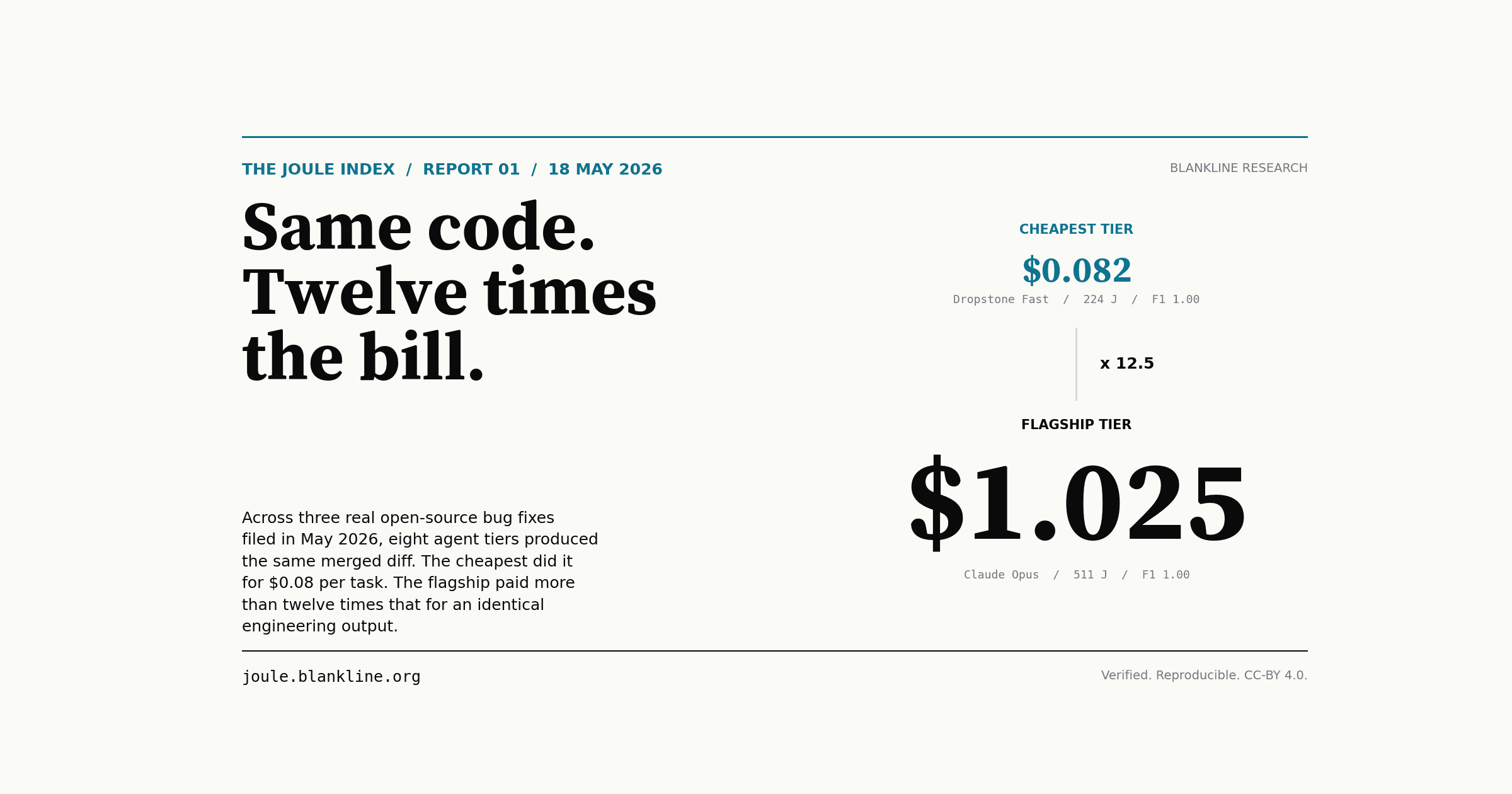
We publish the Joule Index as an open benchmark for normalising coding-agent capability per dollar. The methodology is reproducible against published provider quotas.
Provenance disclosure
We say which open-weight model serves each tier and refresh the choice monthly. The runtime is the safety claim; the model is an implementation detail we replace when something stronger ships.
What we are working on now.




.jpg&w=3840&q=75)

.jpg&w=3840&q=75)


The safety story is the runtime.
Every Dropstone tier ships behind the same approval gate. Read the system card or use the CLI.